

A swimming pool filter continuously removes dirt, pollen, oils, insects, and other particles that would otherwise remain in the water or travel back through the circulation system. Homeowners asking how often a swimming pool filter needs cleaning should consider filter type, pressure changes, swimmer activity, recent weather, water flow, and debris levels instead of relying on one rigid maintenance date. Poseidon Pools explains, “Keeping a swimming pool clean takes time, routine care, and close attention to water conditions,” which also applies to filtration equipment that can become loaded at different rates throughout the year. A dependable pool service can establish normal operating pressure, track changing conditions, and service the filter when performance shows that cleaning is actually needed.
- Filter design determines the correct cleaning method.
- Pressure readings provide an important maintenance benchmark.
- Busy swimming periods can increase the amount of material reaching the filter.
- Wind, pollen, leaves, and storms may shorten service intervals.
- Changes in return flow can indicate increasing filter resistance.
Pool Filter Cleaning Frequency
Pool filter cleaning frequency is most useful when it reflects how the equipment is performing rather than an arbitrary weekly or monthly schedule. A technician can document pressure directly after a complete cleaning, compare that number with readings taken during later visits, and check whether water flow at the returns has weakened at the same time. Pentair advises owners of certain cartridge systems to clean the filter when pressure reaches 10 PSI above its starting pressure. Keeping a written clean-pressure baseline gives homeowners a clearer way to recognize when the filter is becoming restricted instead of guessing based on elapsed time.
- Record pressure immediately after a complete filter cleaning.
- Compare new readings with the established clean baseline.
- Check return flow along with the pressure gauge.
- Expect intervals to change as weather and swimming activity change.
- Keep service records so developing patterns are easier to identify.
Cartridge Filter Cleaning Schedule
Cartridge filters capture contaminants within layers of pleated filter material and generally operate without the backwashing process used by many sand and DE systems. Pentair states that its Clean & Clear Plus cartridge filter should be cleaned when pressure rises 10 PSI above the original reading, showing why a strict monthly schedule may be unnecessary for one swimming pool yet inadequate for another. Filter condition deserves attention at the same time because torn pleats, warped media, damaged end caps, or collapsed cartridges can reduce performance even after debris has been rinsed away. Pool service visits allow technicians to inspect the cartridge closely and determine whether cleaning or replacement makes more sense.
- Cartridges hold contaminants throughout pleated filter media.
- Pressure increase can be more useful than a fixed cleaning date.
- Torn or deteriorated media may need replacement.
- Routine cartridge systems do not usually require backwashing.
- Inspection can reveal damage that water rinsing alone will not correct.
Sand Filter Backwash Timing
Sand filters remove accumulated contaminants by reversing water flow through the filter during a backwash cycle. Hayward instructs owners of certain high-rate sand filters to backwash when pressure rises 8 to 10 PSI above the initial clean pressure, and its guidance notes that accumulated debris causes pressure to rise as flow declines. Heavy leaf fall, pool opening, algae cleanup, nearby landscaping work, or strong storms can cause the filter to reach that threshold sooner than expected. A pool service technician can base the decision on actual pressure and circulation conditions rather than backwashing simply because another seven days have passed.
- Sand filters remove trapped dirt through backwashing.
- Certain Hayward models use an 8 to 10 PSI pressure increase as a trigger.
- Large debris loads can shorten the period between backwashes.
- Reduced flow may accompany a rising gauge reading.
- Backwash timing should follow the installed filter’s instructions.
DE Filter Cleaning Schedule
Diatomaceous earth filters use DE media over internal grids or elements to capture very fine particles from circulating pool water. Pentair recommends backwashing its Quad DE filter when pressure reaches roughly 10 PSI above the original starting pressure or when water flow drops noticeably. Correct servicing also means replacing the required amount of DE according to the equipment instructions because the powder forms the working filtration layer over the internal components. Pool service can be particularly helpful with DE equipment because proper care may involve backwashing, recharging, disassembly, grid inspection, and careful handling of filter media.
- DE filters rely on specialized filtration media.
- Pressure and water flow both provide useful maintenance clues.
- Backwashing does not replace every deeper inspection.
- Fresh DE should be added according to manufacturer directions.
- Worn grids or internal parts may require replacement during service.
Filter Pressure Warning Signs
A pressure gauge becomes much more informative once the homeowner knows the normal reading immediately after a clean filter is returned to operation. A steady increase commonly points to growing resistance as the filter captures more debris, while an unusually low reading may suggest a separate circulation problem involving water level, baskets, suction lines, valves, or the pump. Jandy’s sand filter manual specifies backwashing at 10 to 12 PSI above clean pressure for the models covered by its instructions. Consistent pool service records make changes easier to evaluate because today’s reading can be compared with several prior visits rather than viewed in isolation.
- Clean-filter pressure establishes the most useful reference point.
- Higher readings can indicate increasing resistance within the filter.
- Unexpectedly low readings may point to another circulation issue.
- Service thresholds vary by manufacturer and filter model.
- Sudden gauge changes should be investigated instead of ignored.
Heavy Pool Use Changes Maintenance
Frequent swimming adds oils, sunscreen, perspiration, cosmetics, hair products, and other contaminants that eventually reach the filtration system. Pentair’s cartridge instructions discuss filters exposed to perspiration, suntan lotions, and oils and explain that these substances may require an appropriate cleaning solution rather than a simple rinse. A swimming pool can therefore look clear while the cartridge media is already coated with material that restricts flow. Pool service frequency may need to increase during parties, school breaks, holiday weekends, or other periods when the pool receives substantially heavier use.
- Body oils can collect within cartridge media.
- Sunscreen residue may require a more thorough cleaning process.
- Heavy swimmer activity can increase filtration demand.
- Clear water does not necessarily mean the filter is free of buildup.
- High-use periods may justify earlier pressure checks.
Weather Changes Filter Cleaning
Weather can alter filter-cleaning needs in only a few days because wind, pollen, dust, leaves, insects, and storm debris introduce additional material into the swimming pool. Pentair explains that pressure buildup varies with bathing loads, temperature, and environmental conditions, which is one reason two pools with similar equipment may require very different service intervals. A windy stretch or heavy leaf drop can load the filter much faster than a calm week, even if the previous cleaning occurred recently. Pool service should adapt to changing environmental conditions instead of following exactly the same maintenance schedule throughout every season.
- Wind can carry substantial debris into the circulation system.
- Pollen and fine dust may increase filter loading without obvious large debris.
- Seasonal changes can lengthen or shorten cleaning intervals.
- Regular skimmer basket care reduces some debris before it reaches the filter.
- Severe weather may justify an extra equipment inspection.
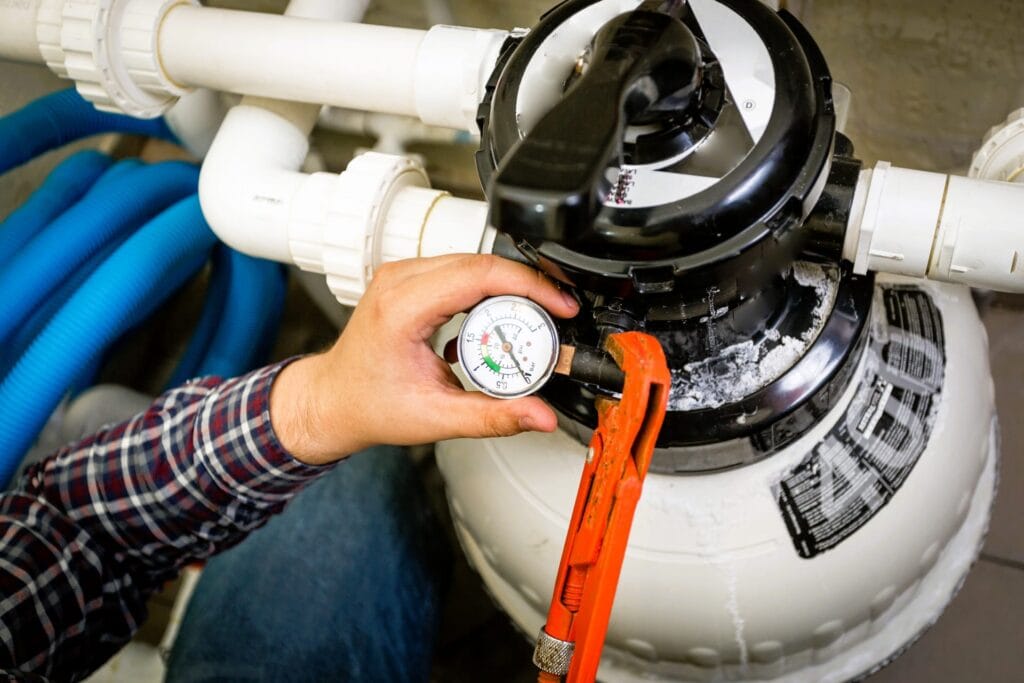
Dirty Filter Warning Signs
A dirty filter may reveal itself through increased pressure, weaker return flow, slower cleanup after debris enters the water, or filtration that no longer keeps pace with normal pool use. Cloudy water should not automatically be blamed on the filter because chemistry imbalance, insufficient sanitizer, algae, pump runtime, or poor circulation can create similar symptoms. The CDC recommends maintaining filtration and recirculation systems according to manufacturer recommendations, reinforcing the value of matching service procedures to the installed equipment. Pool service technicians can evaluate pressure, chemistry, pump performance, circulation, and debris conditions together before concluding that filter cleaning alone will solve the problem.
- Weak return flow can signal increasing restriction.
- Pressure changes provide useful diagnostic information.
- Cloudiness may have causes unrelated to the filter.
- Several circulation and chemistry factors should be checked together.
- Persistent performance changes deserve more than a quick rinse.
Avoid Unnecessary Backwashing
More frequent cleaning does not always produce better filtration, particularly with a sand filter. Jandy identifies backwashing too frequently as one possible contributor to water clarity problems and recommends allowing the pressure to rise before starting the procedure. Unnecessary backwashing can also send a considerable amount of treated water to waste depending on the plumbing configuration. A better pool service strategy uses pressure, flow, debris conditions, and manufacturer recommendations rather than treating backwashing as an automatic weekly requirement.
- Backwashing should respond to filter conditions.
- Sand filters should follow equipment-specific instructions.
- Unnecessary backwashing can waste treated pool water.
- Pressure thresholds reduce guesswork.
- Premature maintenance may add work without improving performance.
Pool Filter Deep Cleaning
Routine rinsing can remove loose dirt, but filter media may gradually collect oils, minerals, scale, algae residue, and other deposits that require a deeper cleaning method. Pentair’s cartridge instructions explain that mineral buildup may require acid soaking and warn that oils must be removed first because incorrect treatment can permanently restrict flow through the cartridge. A thorough service also creates an opportunity to inspect manifolds, O-rings, clamps, grids, drain plugs, cartridges, and other accessible components for deterioration. Pool service becomes particularly useful when maintenance requires chemicals, opening pressurized equipment, or working with internal parts a homeowner may not recognize.
- Oil buildup can require more than a hose rinse.
- Mineral deposits may call for specialized treatment.
- Internal parts can be checked while the filter is open.
- Damaged seals or media can be found before larger problems develop.
- Manufacturer instructions should determine which cleaning products are safe.
Filter Service Safety
Pool filters operate under pressure, making proper shutdown, air relief, and opening procedures important parts of routine maintenance. Pentair states that it recommends filter maintenance be performed by a pool professional and provides model-specific warnings for servicing pressurized filtration systems. Homeowners performing their own maintenance should read the manual for the exact filter rather than assuming every lid, clamp, valve, and tank assembly opens the same way. Pool service can reduce uncertainty when the work involves unfamiliar pressurized equipment or complete disassembly.
- Filters must be completely depressurized before opening.
- Different filter designs require different service procedures.
- Equipment manuals contain important model-specific safety instructions.
- Clamps, lids, seals, and valves should be inspected carefully.
- Professional help is sensible when servicing unfamiliar equipment.
Professional Pool Service Schedule
A useful maintenance plan connects filter condition with pump settings, water chemistry, swimmer activity, environmental debris, and overall circulation instead of treating filtration as a separate chore. ENERGY STAR explains that slower filtration rates can improve filtration while reducing strain on filters, plumbing, and other equipment when variable-speed or multi-speed pumps are used correctly. Detailed service records can document clean pressure, pump settings, weather conditions, chemistry, and cleaning dates, making changing patterns easier to spot. Pool service then becomes a data-based process built around the actual swimming pool rather than a string of unrelated maintenance visits.
- Pressure records reveal recurring trends.
- Pump operation influences water movement through the filter.
- Service history can expose seasonal changes in cleaning needs.
- Water chemistry and filtration should be evaluated together.
- Consistent records can reveal when filter behavior changes unexpectedly.
Pool Filter Care Strategy
The answer to filter-cleaning frequency is rarely every seven days, every month, or another universal interval because swimming pools operate under different conditions. Cartridge, sand, and DE filters require different maintenance procedures, yet manufacturer guidance repeatedly points to pressure increases above the clean starting reading, often combined with reduced flow, as an important service signal. Weather, swimmers, oils, sunscreen, pollen, leaves, algae, pump settings, filter age, and equipment condition can all move that maintenance point forward or backward. Consistent pool service helps homeowners respond when the filter truly needs care while avoiding unnecessary maintenance that wastes water, chemicals, or time.
- Filter design determines the correct maintenance procedure.
- Clean starting pressure should be documented after service.
- Flow changes can confirm what the pressure gauge is showing.
- Cleaning frequency should change when pool conditions change.
- Manufacturer guidance should take priority over a generic calendar.

Pool Service Key Takeaways
Filter care becomes more dependable when homeowners stop treating cleaning as a fixed calendar task and start watching how the equipment performs from week to week. Manufacturer guidance for several common filter designs points toward pressure rise and lower flow as useful service indicators, while swimmer activity, weather, debris, oils, and water conditions explain why those readings change at different speeds. A pool service can combine pressure history with inspections, pump checks, chemistry testing, and seasonal conditions to create a maintenance schedule based on one specific swimming pool. That approach helps prevent excessive restriction while avoiding premature cleaning that provides little practical benefit.
- Many filters need cleaning after a manufacturer-specified pressure increase above the clean baseline.
- Cartridge, sand, and DE filters require different maintenance methods.
- Heavy swimmer use can introduce oils and sunscreen into filter media.
- Weather and seasonal debris can shorten service intervals.
- Routine pressure records make maintenance decisions easier.
- Equipment-specific guidance is more useful than a universal cleaning schedule.
Pool Filter Cleaning FAQs
How Often Should Filters Be Cleaned?
No single interval works for every swimming pool filter because debris load, swimmer activity, weather, pump operation, filter size, and equipment design all influence how quickly restriction develops. Many manufacturers tell owners to compare current pressure with the clean starting pressure rather than relying only on time, which makes a documented baseline especially useful during regular pool service.
How Can Owners Spot a Dirty Filter?
Rising filter pressure and declining return flow are two common signs that accumulated debris may be restricting circulation. Cloudy water can appear too, but chemistry problems, low sanitizer levels, algae, inadequate pump runtime, and poor circulation can cause similar symptoms, so homeowners should evaluate several indicators before assuming the filter is responsible.
Can Filters Be Overcleaned?
Some filtration systems can receive maintenance more often than operating conditions require. Jandy’s sand-filter instructions specifically caution against backwashing too frequently and recommend allowing pressure to rise before beginning that procedure, which is why pool service based on actual readings can prevent unnecessary work and water loss.
Does Pool Service Clean Filters?
Many pool service plans include filter inspection and routine maintenance, but the exact work varies by provider and package. Cartridge removal, DE recharging, sand backwashing, internal inspection, and deeper chemical cleaning may occur at separate intervals or carry different charges, so homeowners should review the written scope of service.
What Happens Without Filter Cleaning?
A filter that continuously traps contaminants eventually creates increasing resistance to water moving through the circulation system. ENERGY STAR notes that intentionally slower filtration through properly adjusted pump operation can be beneficial, but a clogged filter is different because accumulated material restricts flow rather than managing pump speed efficiently. Ignoring manufacturer cleaning signals can eventually lead to weaker circulation, reduced filtration performance, and equipment conditions that need attention.

Angela Knight is a seasoned journalist with a deep-rooted passion for covering the vibrant local business scene in Slidell, LA. Her expertise lies in spotlighting the unique stories of local entrepreneurs and keeping her finger on the pulse of the latest business news and trends within the community. With a keen eye for detail and a commitment to impactful storytelling, Angela’s articles serve as a vital resource for residents and business owners alike, offering insights, updates, and inspiration. Her work not only informs but also celebrates the entrepreneurial spirit and community engagement that define Slidell’s business landscape.