
When your garage door fails to operate as expected, there’s usually a deeper problem behind it. These issues don’t always appear obvious, but they can quickly disrupt daily schedules or compromise home safety. Figuring out the actual cause isn’t just about what’s visible on the surface—it takes careful troubleshooting and experience. Slidell Garage Door Repair advises, “Even the most minor symptoms can turn into expensive damage if garage door repair isn’t approached with care and accuracy.”
1. Severely Degraded Garage Door Springs
Springs bear the heaviest load during door movement. Over time, they stretch, fatigue, or snap entirely, preventing the door from lifting correctly. Torsion springs in particular often fail without warning after thousands of cycles. Industry estimates place their lifespan around 10,000 operations, which averages to 7 years of moderate use.
- springs that separate or sag lose their lifting strength
- uneven spring tension causes the door to stick or tilt
- failure can result in a sudden, dangerous drop
2. Inconsistent Garage Door Opener Function
An opener is more than a motor—it’s a blend of wiring, relays, and mechanical parts working in harmony. Faulty logic boards, damaged internal gears, or overheated motors often create unexpected failures. If the door clicks, tries to move, then stops, the internal mechanics may be to blame.
- stripped gears fail to transfer motion to the drive
- faulty limit settings stop the opener before full travel
- circuit board damage breaks remote and wall switch communication
3. Mildly Misaligned Garage Door Tracks
Even small shifts in the steel track system can throw off the entire operation. When tracks are bent or brackets loosen, the rollers may snag or fall out of place. This results in shaking, stalling, or loud grinding noises during use.
- rollers that bind create friction and stop motion
- mounting brackets that loosen allow track drift
- warped track edges scrape or dent the door frame
4. Slightly Off Garage Door Sensor Positioning
Sensors near the floor must remain precisely aligned to ensure safety. If one gets bumped or blocked, even temporarily, the system assumes an obstacle is in the way and halts. Dust buildup, moisture, or subtle shifts in alignment are enough to cause sensor errors.
- blocked lenses stop the door from moving at all
- shifted sensor brackets throw the beam off path
- wiring damage causes false signals or no signal
5. Nearly Dead Garage Door Remote Battery
Weak batteries often create inconsistent performance. Remotes may work occasionally, only at close range, or require multiple button presses. Homeowners frequently blame the opener itself without realizing it’s just the remote’s power source failing.
- low batteries reduce signal strength noticeably
- weather fluctuations can degrade battery life faster
- replacing old batteries often solves intermittent remote issues
6. Disengaged Emergency Release Handle
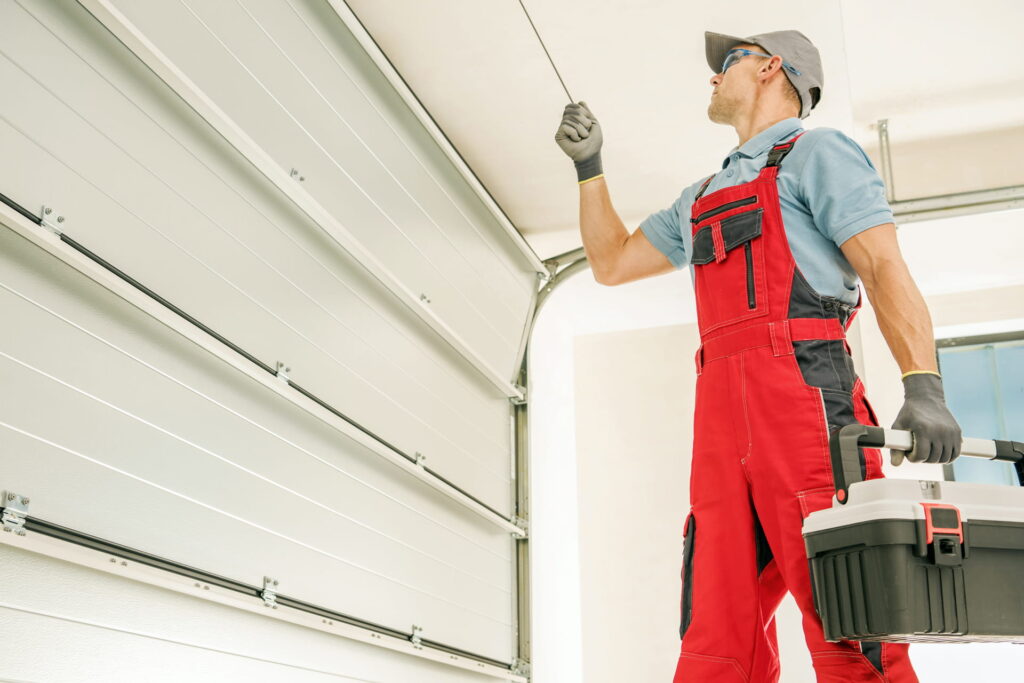
The red emergency handle disconnects the door from the motor for manual use. If pulled accidentally, the opener can run without moving the door. This is commonly mistaken for a mechanical failure when the door is simply in manual mode.
- manual release leaves the door off-track
- reattachment may require aligning the trolley correctly
- opener motors can sound active but remain ineffective
7. Unexpected Garage Power Interruption
Loss of power to the opener stops it from responding completely. This may come from a tripped circuit, unplugged power cord, or a failed GFCI outlet. Because the opener itself shows no lights or signs, many overlook the issue as electrical.
- circuit resets may be needed after heavy storms
- some outlets require manual button resets
- faulty surge protectors can silently cut power supply
8. Seasonally Frozen Garage Door Seal
In winter, melted snow or condensation can freeze under the seal overnight. When the opener tries to lift the door, it may strain or stop entirely to avoid tearing the seal. Cold weather maintenance becomes essential in these cases.
- seal freezing can damage both opener and door edge
- heating the area with a dryer or warm water helps release the bond
- rubber protectants reduce ice sticking to the surface
9. Progressively Frayed Garage Door Cables
Cables carry tension across both sides of the door, balancing its movement. Fraying usually begins near the drums and pulleys where friction and wear are greatest. If one cable breaks, the door will lift unevenly or jam altogether.
- rust and moisture weaken cables over time
- loose or noisy cables indicate early failure
- snapping under tension can cause injury or door damage
10. Small Obstructions Along Garage Door Path
Minor clutter or misplaced tools near the track or threshold often interfere with normal operation. Items don’t need to be large—boxes, cords, or uneven flooring can disrupt sensors or block motion. These problems are among the simplest to fix but frequently overlooked.
- regular cleaning prevents debris buildup
- stored items should not lean near the side rails
- door sensors need a clear and consistent view
Key Takeaways on Why Garage Doors Stop Working
Understanding why a garage door won’t open comes down to awareness and routine inspection. Springs wear out, sensors drift, and tracks misalign, all naturally over time. Problems often start subtly and become more serious if ignored. Addressing strange sounds, hesitations, or visible wear early on prevents major disruptions. Slidell Garage Door Repair recommends seasonal maintenance and paying close attention to any changes in door behavior.
Frequently Asked Questions
What causes garage door springs to break without warning?
Long-term stress, corrosion, and lack of lubrication cause tiny fractures that eventually snap under pressure.
Why does my opener sound like it’s working, but the door doesn’t move?
Most likely the emergency release has been pulled, disconnecting the opener from the door’s travel mechanism.
Can a power problem affect only the garage door?
Yes, many garages run on separate GFCI-protected circuits that can trip independently from the rest of the home.
How do I stop the door from freezing to the floor in winter?
Dry the area regularly and apply a silicone-based lubricant to the bottom seal before freezing weather sets in.
Is it safe to fix garage cables on your own?
No—garage door cables carry high tension and can be dangerous. Professional repair is strongly recommended.

Angela Knight is a seasoned journalist with a deep-rooted passion for covering the vibrant local business scene in Slidell, LA. Her expertise lies in spotlighting the unique stories of local entrepreneurs and keeping her finger on the pulse of the latest business news and trends within the community. With a keen eye for detail and a commitment to impactful storytelling, Angela’s articles serve as a vital resource for residents and business owners alike, offering insights, updates, and inspiration. Her work not only informs but also celebrates the entrepreneurial spirit and community engagement that define Slidell’s business landscape.